
 Download
 Searchable
Diverter Valves for High-Abrasion Slurry Transport
Ceramic-Lined Slurry Diverter Valves Engineered for Wear Life and Seal Integrity
Unicast slurry diverter valves are ceramic-lined industrial valves designed for high-solids abrasive transport in mining, mineral processing, and heavy industrial systems. These abrasion-resistant slurry diverter valves combine ½-inch ceramic reinforcement in high-wear zones with precision-aligned gate sealing to reduce leakage and extend service life in erosive slurry environments.
Unlike conventional steel or rubber-lined valves, Unicast ceramic slurry diverter valves are engineered specifically for sustained slurry erosion, turbulence, and cavitation exposure, which greatly outperforms other lining solutions.
Slurry Valve Function in Abrasive Systems
Slurry diverter valves regulate or redirect liquid-solid mixtures in pressurized piping systems. Typical slurries include:
- Mineral concentrates
- Tailings
- Sand-water mixtures
- Coal slurry
- High-solids process byproducts
In abrasive slurry service, wear typically concentrates at:
- Inlet entry zones
- Valve body outlets
- Gate-seat sealing interfaces
- Internal flow transitions

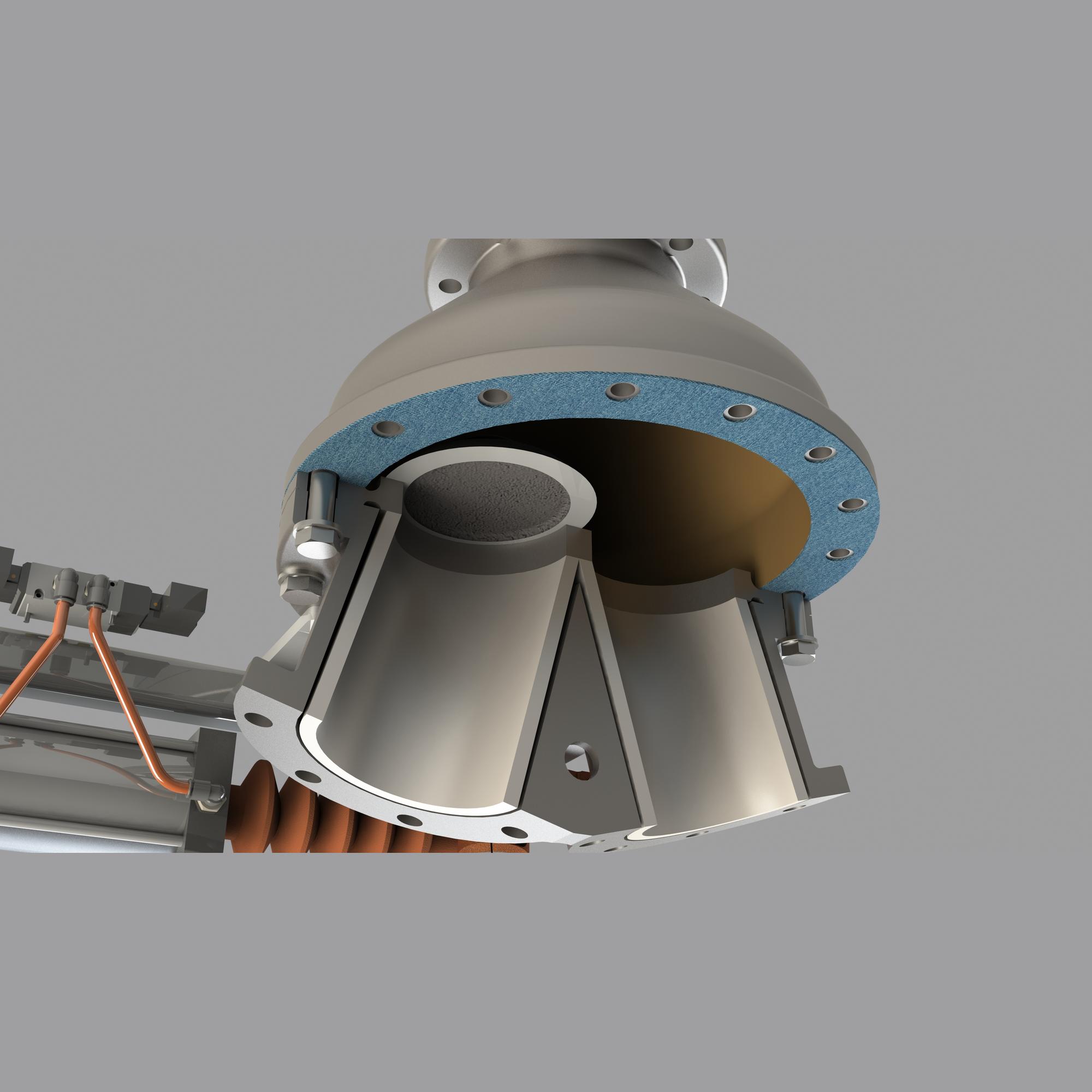
Failure commonly results from erosive material loss, seal degradation, and turbulence-induced cavitation.
Unicast’s abrasion-resistant slurry diverter valves, therefore, protect critical geometry with abrasion-resistant surfaces where possible and make components that are unprotected easy to repair and replace.
Ceramic Liner Performance in Slurry Applications
- Increased resistance to slurry-driven erosion compared to exposed steel
- Extended service life in high-solids applications
- Reduced replacement frequency
- Predictable wear progression
Abrasion-Resistant Slurry Valve Design Details
Precision-Aligned Gate Assembly
- Reduced abrasive intrusion into sealing surfaces
- Lower leakage risk under high-solids flow
- Stable gate transition between inlets
- Improved dimensional consistency over time
Streamlined One-Piece Seat Geometry
The seat assembly is sandwiched between upper and lower housing sections with exact flange alignment.
Engineering purpose:
- Reduces turbulence within the valve body
- Minimizes cavitation in abrasive slurry
- Supports controlled flow transition
- Limits uneven wear patterns
Cavitation in slurry transport can accelerate erosion beyond particulate wear alone. Controlled geometry helps mitigate this effect.
Rubber-Coated Drive Arm
The drive arm is rubber-coated to provide additional abrasion shielding.
Benefits:
- Protects exposed actuation components
- Extends mechanical linkage lifespan
- Reduces particulate intrusion
Precise Position Control
Manual configurations feature adjustable limit bump stops:
- Ensures exact lever positioning
- Improves operator control
- Prevents partial engagement misalignment
Comes with limit switches for automatic control with:
- Electric gear motors
- Pneumatic actuators
One multipurpose lever design supports three actuation configurations.
Operational Boundaries
- High-solids slurry transport
- Mineral processing lines
- Mining tailings systems
- Sand-water abrasive mixtures
- Coal slurry routing
- Industrial abrasive slurry pipelines
- Extremely corrosive chemical-only service beyond ceramic resistance
- Ultra-high pressure conditions exceeding the design rating
- Clean liquid systems where ceramic reinforcement is unnecessary
For chemical-dominant or low-solids systems, alternate valve materials may be appropriate.
Failure Diagnostics

- Leakage appears at seat interface
- Flow turbulence increases unexpectedly
- Abrasion patterns are visible at inlet sleeves
- Gate actuation resistance changes
Engineering Comparison
Ceramic-Lined vs Steel Slurry Diverter Valves
| Factor | Ceramic-Lined | Steel |
|---|---|---|
| Slurry erosion resistance | High | Moderate |
| Service life in high-solids slurry | Extended | Shortened |
| Maintenance frequency | Reduced | Increased |
| Cavitation resistance | Improved | Limited |
| Leakage risk | Lower with precision alignment | Higher over time |
In abrasive slurry environments, ceramic-lined slurry diverter valves significantly reduce lifecycle replacement frequency.
Ceramic-Lined vs Rubber-Lined Slurry Diverter Valves
| Condition | Ceramic-Lined | Rubber-Lined |
|---|---|---|
| High-solids slurry | Excellent | Moderate |
| Abrasive mineral transport | Excellent | Moderate |
| Impact-heavy conditions | Moderate | Good |
| High-temperature slurry | Better stability | Limited tolerance |
Ceramic slurry diverter valves are typically preferred when abrasion dominates over impact elasticity requirements.
Industry Applications


Technical & Decision FAQs
- When should I specify a ceramic-lined slurry diverter valve?
- Ceramic-lined slurry diverter valves are typically specified when erosion from high-solids abrasive flow is the primary failure mode. In mineral processing and mining systems, ceramic reinforcement significantly extends service life compared to steel valves.
- What solids concentration can these slurry diverter valves handle?
- Performance depends on slurry composition, particle size, velocity, and pressure. Ceramic-lined slurry diverter valves are engineered for high-solids abrasive service and should be evaluated based on system parameters.
- How do ceramic slurry diverter valves reduce leakage?
- Leakage in slurry systems often begins when erosion alters gate-seat alignment. Precision-aligned sealing geometry helps maintain dimensional stability and reduce abrasive intrusion into seal surfaces.
- How thick are the ceramic liners?
- The majority of the valve body is lined with ½” thick cast ceramic sleeves for increased wear resistance.
- Are these slurry diverter valves compatible with motorized systems?
- Yes. Slurry diverter valves are adaptable to electric gear motors and pneumatic actuators, depending on system requirements.
Engineered for High-Consequence Slurry Systems
In slurry transport systems, valve failure directly impacts:
- Plant uptime
- Environmental exposure risk
- Maintenance labor costs
- Safety conditions
- Replacement frequency
Unicast ceramic-lined slurry diverter valves are engineered specifically for abrasive slurry transport environments where leakage control and wear life are critical.