
 Download
 Searchable
Diverter Valves for Abrasive Bulk Material Handling
Ceramic-lined Diverter Valves Engineered for High-Uptime Industrial Systems
Bulk Material Diverter Valves in Abrasive Service


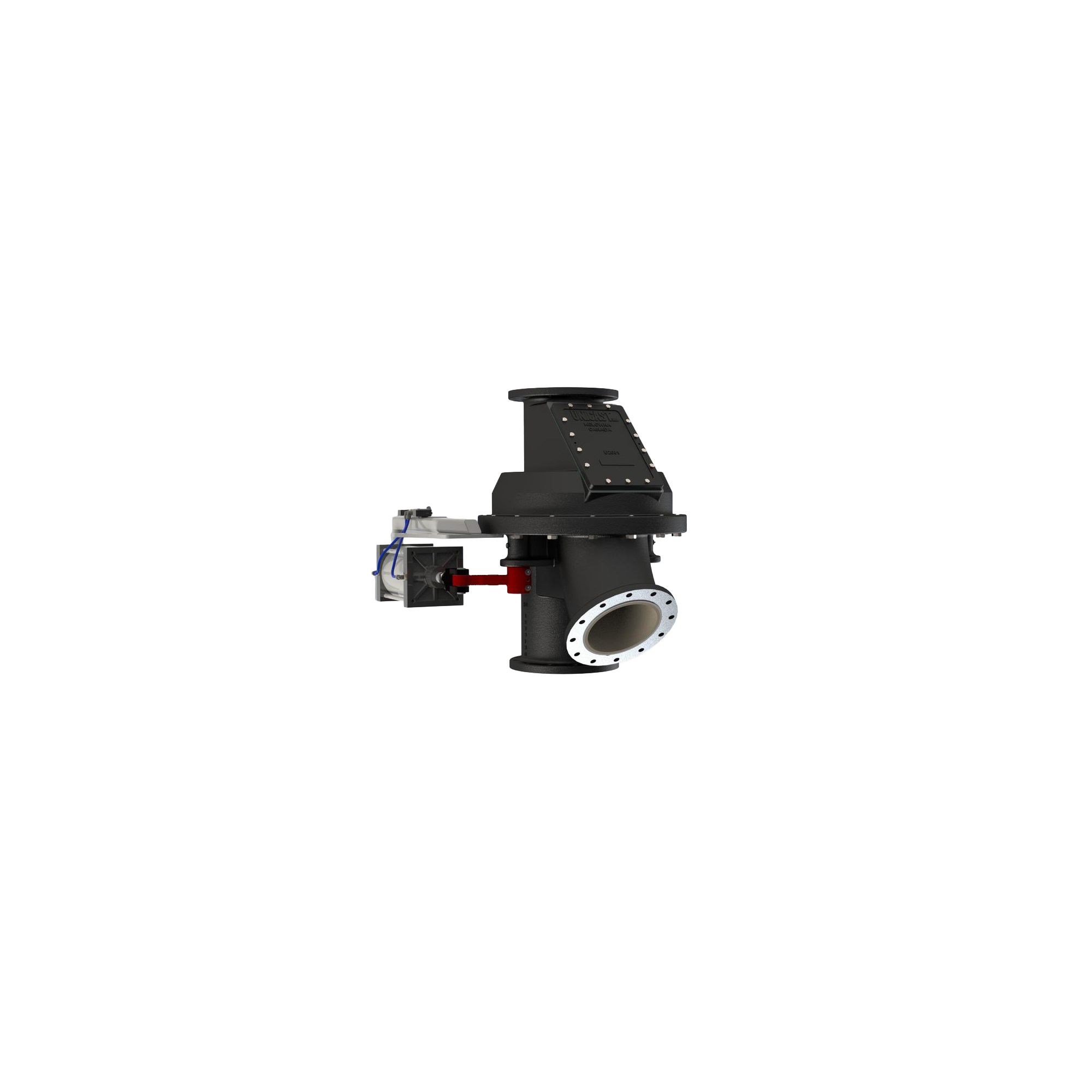

Bulk material diverter valves are routing devices designed to redirect dry particulate materials between two discharge paths in gravity-fed and pneumatic conveying systems. They are commonly installed in cement, fly ash and coal routing networks, where continuous abrasive flow is present.
In high-abrasion service, wear concentrates at:
- Inlet/outlet transition regions
- Gate-seat sealing interfaces
- Curved sections
Ceramic Liner Performance in High-Abrasion Diverter Valve Applications
- Significantly higher resistance to dry particulate erosion than AR steel
- Superior wear life in fly ash, limestone, coal fines, and sand
- Stable performance at elevated temperatures common in cement plants
- 25-year liner warranty
- Lower total lifecycle cost in abrasive service
Abrasion-Resistant Diverter Valves
Engineering Design Details
- Controlled sealing between gate and seat
- Reduced leakage risk
- Minimized particulate bypass
- Consistent sealing performance across cycles
Inline Maintenance Access
Large access panel enables in-line maintenance.
Typical maintenance time: approximately 2-4 hours.
- Elevated installations
- Restricted-access platforms
- Maintenance with minimal downtime
NO CRANE. NO HOIST. NO EXTENDED SHUTDOWN EXPOSURE.
Diverter Valves Configurations
Classic Diverter Valve
- Pneumatic, manual or electric motorized actuation
- Left or right-hand drive
- Suitable for standard routing applications
- Compatible with retrofit installations
Split Modular Valve (SMV)
Designed for tight structural clearances and restricted-access installations.
- Modular body construction
- Faster right-left reconfiguration
- Improved service accessibility
- Available from 8 inches and larger sizes
- Manual operation
- No impact tools required
- Controlled routing applications
Split Modular Valve (SMV) with Direct Drive Motor
- Control-room actuation
- Reduced technician exposure
- Ideal for elevated or hazardous access areas
Available Sizes & Options
4” 5” 6”, 8”, 10”, 12”, 14”
Additional sizes:
16”, 18”, 24"
Custom builds:
Up to 24”
Optional safety guarding is available.
30-degree and 45-degree configurations
Actuation options:
- Electric gear motor
- Pneumatic actuator
- Manual handwheel actuator
Operational Boundaries
- Dry abrasive bulk materials
- Pneumatic conveying systems
- Gravity-fed routing systems
- Cement, fly ash and dry abrasive powders
- Coal fines and dry mineral concentrates
- Sand and aggregate distribution
- High-pressure slurry service
- Continuous simultaneous bidirectional flow
- Severe chemical corrosion environments
- Extreme impact loads exceeding ceramic tolerance
Failure Diagnostics

- Seal leakage develops
- Gate movement resistance changes
- Particulate bypass is observed
- Access panel inspection shows liner wear progression
Engineering Comparison
Ceramic-Lined vs AR Steel Diverter Valves
| Factor | Ceramic Diverter Valves | AR Steel Valves |
|---|---|---|
| Service life in clinker | Extended | Limited |
| Replacement frequency | Reduced | Increased |
| Weight | Moderate | Heavy |
In cement and mining environments, ceramic-lined diverter valves typically outperform steel-based alternatives in total lifecycle cost.
Ceramic-Lined vs AR Steel Diverter Valves
| Condition | Ceramic-Lined | Rubber-Lined |
|---|---|---|
| Dry abrasive material | Excellent | Moderate |
| Impact-heavy flow | Moderate | Good |
| Temperature stability | High | Limited |
| Lifecycle cost in abrasive cement | Lower | Higher |
Rubber-lined diverter valves may perform well in impact-dominant scenarios but degrade faster under dry abrasive erosion.
Split Modular Valve vs Classic Diverter Valve
| Scenario | Recommended Configuration |
|---|---|
| Tight structural clearance | Split Modular Valve (SMV) |
| Frequent orientation switching | Split Modular Valve (SMV) |
| Standard routing layout | Classic Diverter Valve |
| Fixed routing application | Classic Diverter Valve |
Industry-Specific Performance


Technical & Decision FAQs
- When should I specify a ceramic-lined diverter valve instead of a steel valve?
- If your application involves continuous dry abrasive flow such as cement powder, coal fines, sand, or limestone, steel-bodied diverter valves typically erode rapidly at inlet and throat transitions. Ceramic-lined diverter valves are specified when abrasion-driven wear is the dominant failure mode.
Unicast ceramic diverter valves use ½-inch cast ceramic liners in high-wear zones to significantly reduce erosion and extend maintenance intervals in abrasive bulk material systems. - What typically fails first in standard diverter valves?
- In abrasive bulk material handling systems, failure usually begins at:
- Inlet impact zones
- Gate-seat sealing surfaces
- Discharge throat transitions
- How long do ceramic diverter valves last in cement or mining plants?
- Service life depends on material abrasiveness, velocity, and duty cycle. In cement clinker and mining applications, ceramic-lined diverter valves typically outlast steel or rubber-lined alternatives due to superior resistance to dry particulate erosion.
Unicast diverter valves are backed by a 25-year warranty on valve bodies and ceramic liners, reflecting confidence in long-term abrasive performance. - How much downtime does diverter valve maintenance require?
- Traditional diverter valves can have limited maintenance access depending on installation layout and structural clearance. In many plants, servicing wear components requires partial disassembly or difficult access conditions, which can extend maintenance time and increase shutdown exposure. Unicast diverter valves are engineered for inline maintenance access, allowing typical service completion in approximately 1-3 hours without structural removal.
This is particularly critical in elevated installations where maintenance access risk is high. - How do I choose between a split modular valve and a classic diverter valve?
- Split modular valves are recommended when:
- Structural clearance is limited
- Frequent right-left orientation changes are required
- Access constraints increase service difficulty
Unicast offers both configurations to match installation constraints and maintenance strategy. - Are diverter valves suitable for pneumatic conveying systems?
- Yes, diverter valves are commonly used in pneumatic conveying systems for dry bulk material routing. Proper selection depends on material abrasiveness, velocity, and pressure. Application review is recommended to confirm compatibility.
Unicast diverter valves are engineered specifically for abrasive bulk material handling in gravity-fed and pneumatic systems. - When should a ceramic diverter valve NOT be used?
- Ceramic-lined diverter valves may not be appropriate in:
- High-pressure slurry service
- Extremely impact-dominant conditions exceeding ceramic tolerance
- Highly corrosive chemical-only environments
Designed for Abrasive System Reliability
Unicast ceramic diverter valves are engineered specifically for dry bulk material systems where predictable wear life, seal integrity, and controlled maintenance access are required. Configuration and actuation options are selected based on material abrasiveness, flow velocity, and installation constraints.